Your cart is empty

Why Can a Coloured Diamond Cost More Than a Colourless One?
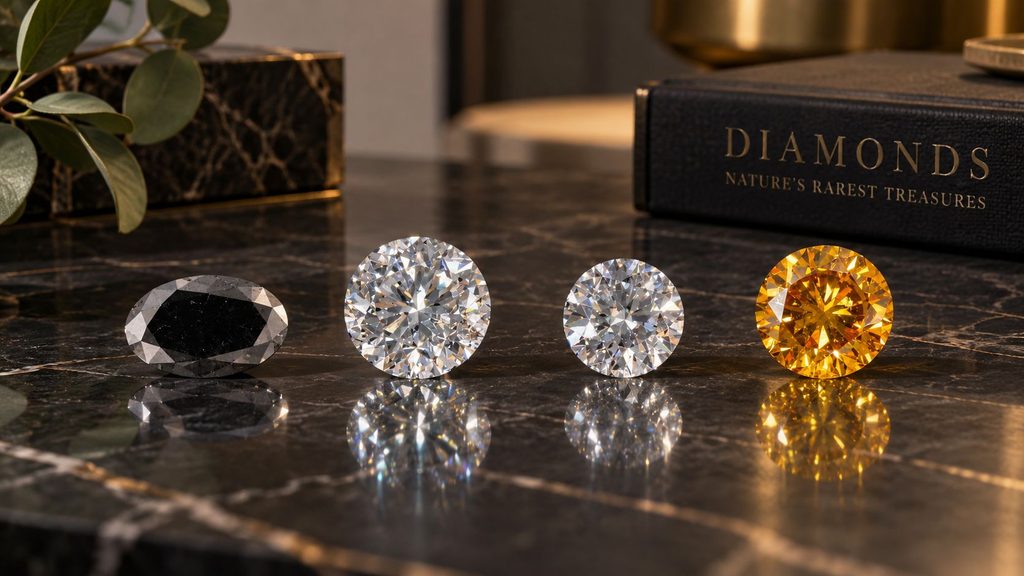
With colourless diamonds, you usually pay for the least possible tint of colour. With natural fancy diamonds, the logic is the opposite: it is precisely the intensity, hue and origin of the colour that can significantly increase the price per carat. Using specific stones, we explain how the Fancy scale works, where the individual colours come from and why certification is essential for them.
Two numbers that make no sense – until you understand why
In our investment stones category we have two diamonds side by side that illustrate very clearly the different pricing logic of colourless and coloured stones.
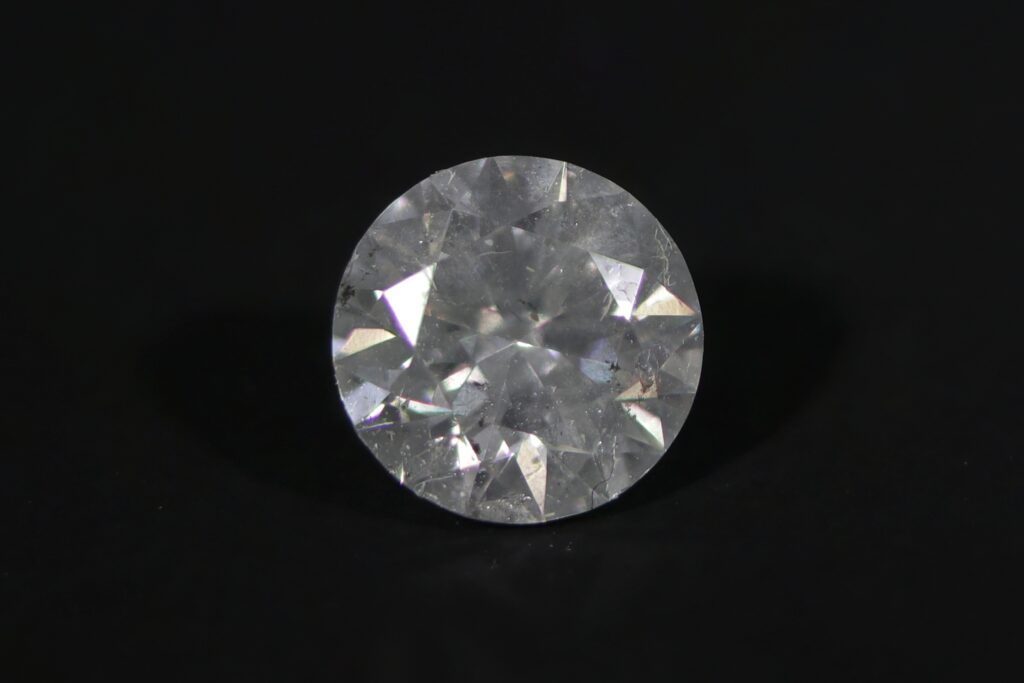
A colourless 1.22 ct brilliant has colour E, clarity SI2, an Excellent cut and a certificate from the IGL laboratory. Its price is CZK 83,700, i.e. approximately CZK 68,600 per carat.
A 0.52 ct Fancy Intense Greenish Yellow has a cushion modified brilliant cut and a GIA report. It costs CZK 162,770, which corresponds to approximately CZK 313,000 per carat.
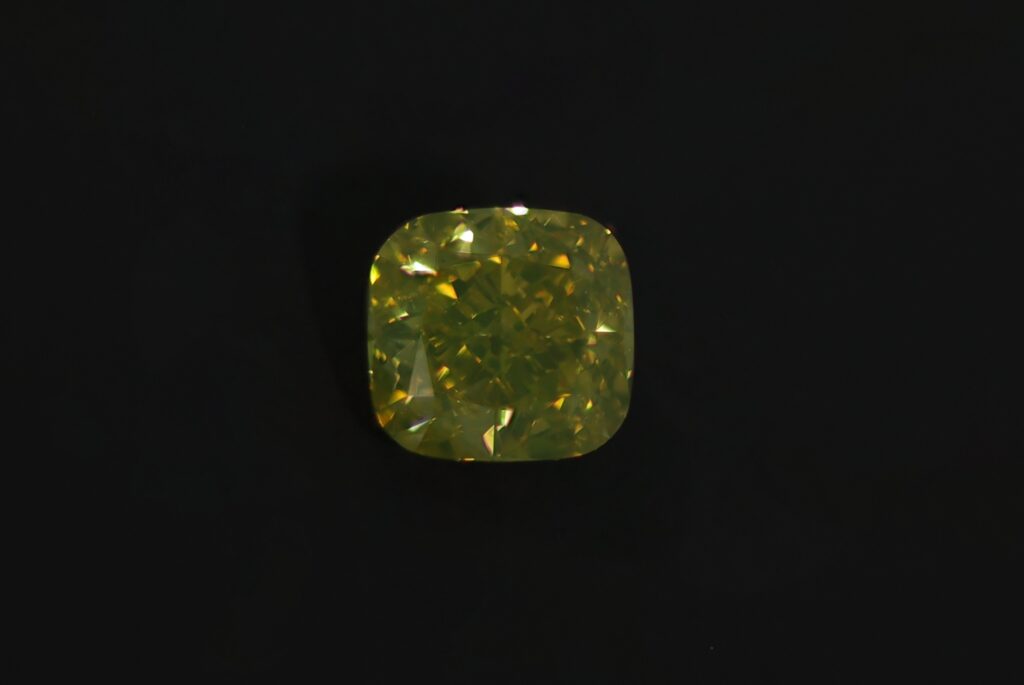
The coloured stone therefore weighs less than half as much, yet costs almost twice as much, and its price per carat is more than four times higher.
If you only know the common rule that diamonds are valued for having as little colour as possible, such a comparison may seem illogical. The difference starts to make sense once we separate two completely different colour-grading scales – and with them two different pricing logics.
Two scales, two different logics
With diamonds, the term “colour” is used in two different contexts. With conventionally graded colourless diamonds, it is the absence of colour that is valued; with natural fancy diamonds, on the contrary, the value lies in the hue itself, its saturation and intensity.
The D–Z scale: the less colour, the higher the price
The GIA scale for colourless and near-colourless diamonds runs from D to Z. Towards the later letters, an increasingly distinct yellow or brownish tint appears. Grade D represents the highest colour grade on this scale and is among the rarest.
On this scale, visible colour therefore usually lowers the price. A grade M stone will have a noticeably warmer tint than a D or E stone. Our 1.22 ct diamond has colour E, the second-highest grade, which is one of the key parameters of its value.
The Fancy scale: the more colour, the higher the price
For yellow and brown diamonds, the fancy colour system begins where the intensity of colour exceeds grade Z. Diamonds with other hues, such as blue, green or pink, are graded in the coloured diamond system according to their face-up colour.
GIA uses nine colour grades for coloured diamonds: Faint, Very Light, Light, Fancy Light, Fancy, Fancy Intense, Fancy Vivid, Fancy Deep and Fancy Dark. The final grade is based on a combination of hue, tone and saturation. Intense and vivid colours are particularly prized; diamonds with red and reddish hues are among the rarest.
The difference between the individual grades is not merely terminological. Moving from Fancy Intense to Fancy Vivid, for example, can mean a significant price jump for otherwise comparable stones. The rarer the specific hue and the more exceptional the intensity of the natural colour, the more strongly this parameter affects the price.
Where the colour comes from: the chemistry and physics of the crystal
The origin of the colour is essential not only for understanding the rarity of individual diamonds but also for identifying them correctly. The same visual effect can have several different physical and chemical causes in nature – and some of them can be imitated by technological treatment.
Yellow – nitrogen
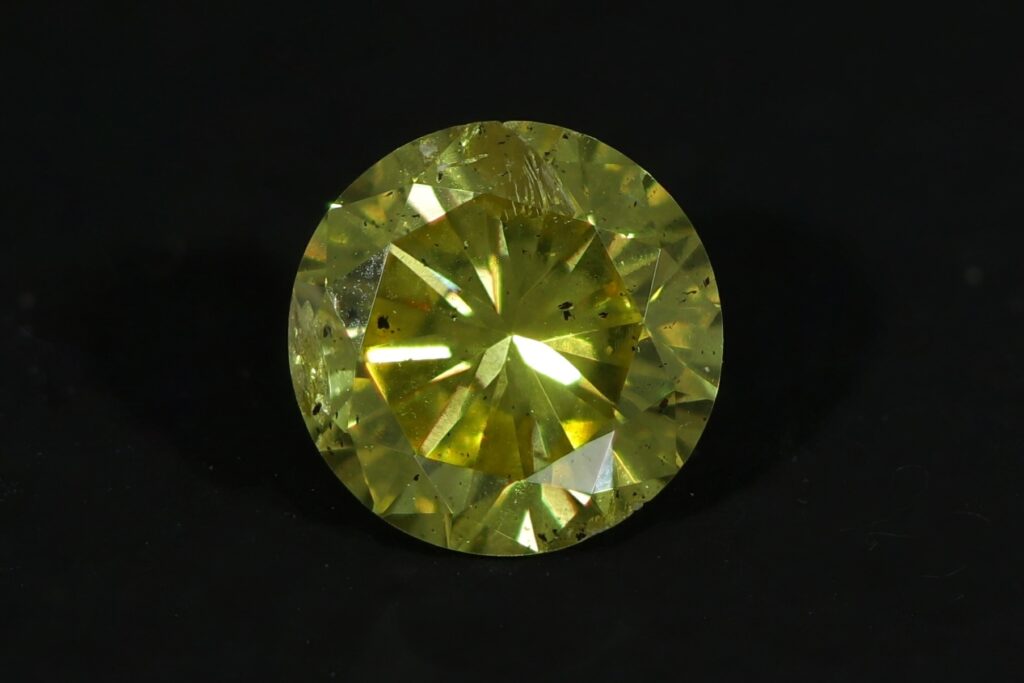
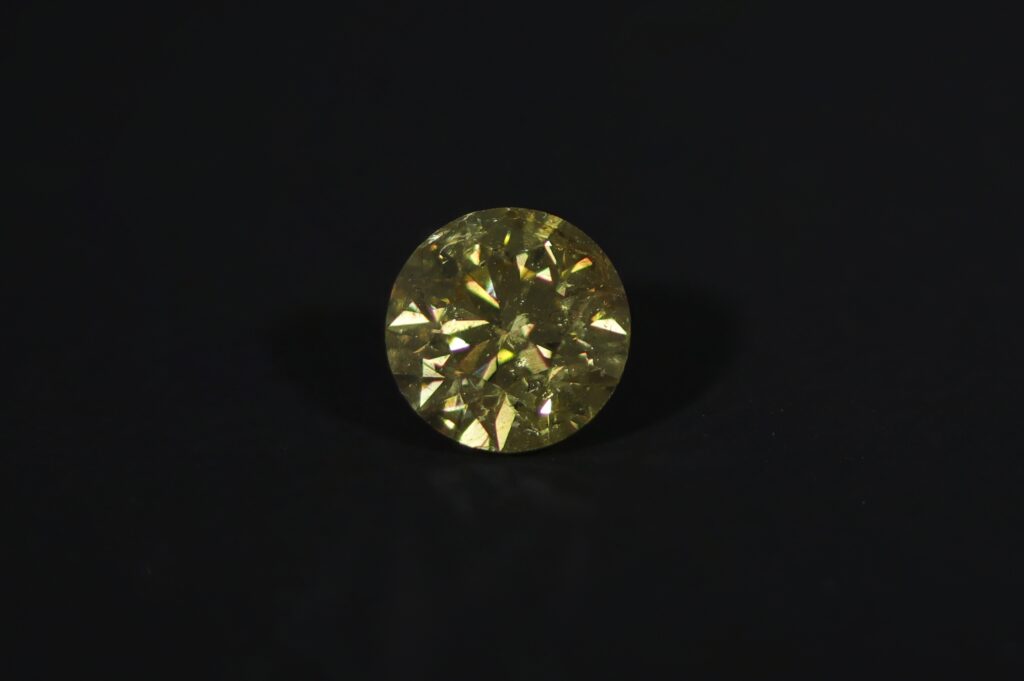
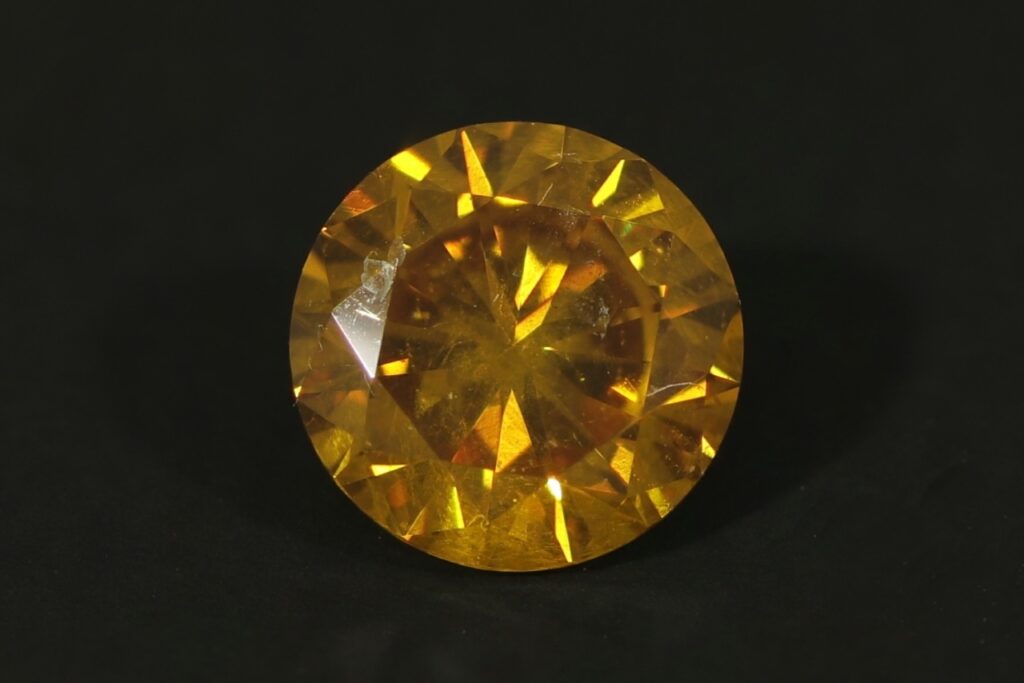
Yellow is the most common of the natural fancy colours. Yellow colouring is linked mainly to nitrogen and nitrogen-related defects in the diamond’s crystal lattice, which affect the absorption of light. Because nitrogen occurs relatively often in diamonds, yellow diamonds are more accessible within the fancy category than, for example, blue, pink or red ones. Even so, they represent only a small part of production.
In our range you can compare several intensities and hues: Fancy Vivid Yellow 0.29 ct, Intense Yellow 0.7 ct and Fancy Deep Yellow-Orange 0.31 ct.
Blue – boron
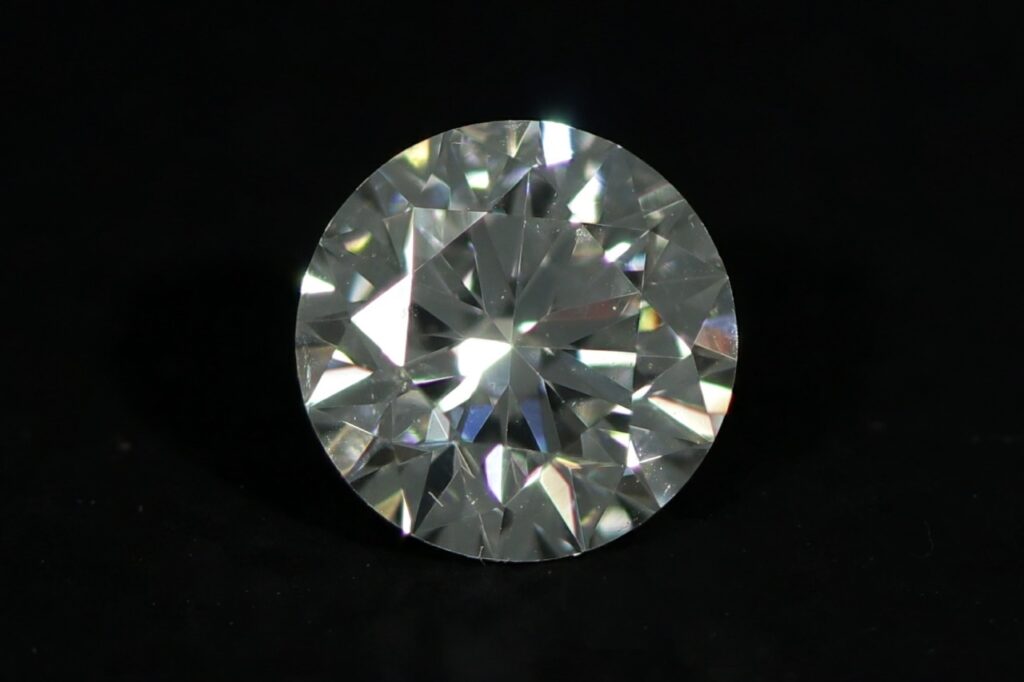
In most natural blue diamonds, the mechanism is different. Traces of boron in the crystal lattice change the absorption of light and can also give the diamond electrical conductivity, which is one of the features used in gemmological testing. An example from our range is a Fancy Light Blue 0.25 ct with a CGL laboratory certificate, VS1 clarity and an Excellent grade for cut, polish and symmetry.
Pink and red – lattice deformation
Pink and red diamonds are a different case from yellow or blue ones. Their colour is not explained in the same way by the presence of nitrogen or boron, but by changes and deformations of the crystal lattice associated with extreme conditions deep within the Earth.
It is therefore a structural change in the crystal itself, which affects the way the diamond absorbs and transmits light. The difficulty of predicting this process is one of the reasons for the exceptional rarity of pink and especially red stones.
Green – natural irradiation
Green diamonds can acquire their colour through natural radioactive radiation from the surrounding rocks, which over a very long time creates defects in the crystal lattice. The colour may be concentrated only in the surface layers, so there is a risk of it being partly or completely removed during cutting. At the same time, it is difficult to reliably distinguish natural irradiation from artificially induced irradiation, which is why laboratory assessment of the origin of colour is of exceptional importance for green diamonds.
Black – a different story
Black diamonds are not a single homogeneous category. In natural single-crystal black diamonds, the dark appearance can be caused by numerous graphite and other mineral inclusions or by coloured micro-fractures. A special case is carbonado – a natural polycrystalline form of diamond made up of many tiny diamond crystals.
This is well illustrated by the 5.32 ct black diamond in our range. It is a so-called carbonado cut into an oval, priced at CZK 44,000, i.e. approximately CZK 8,300 per carat. Its price per carat is thus significantly lower than that of the colourless diamond mentioned above and many times lower than that of the greenish-yellow Fancy Intense.
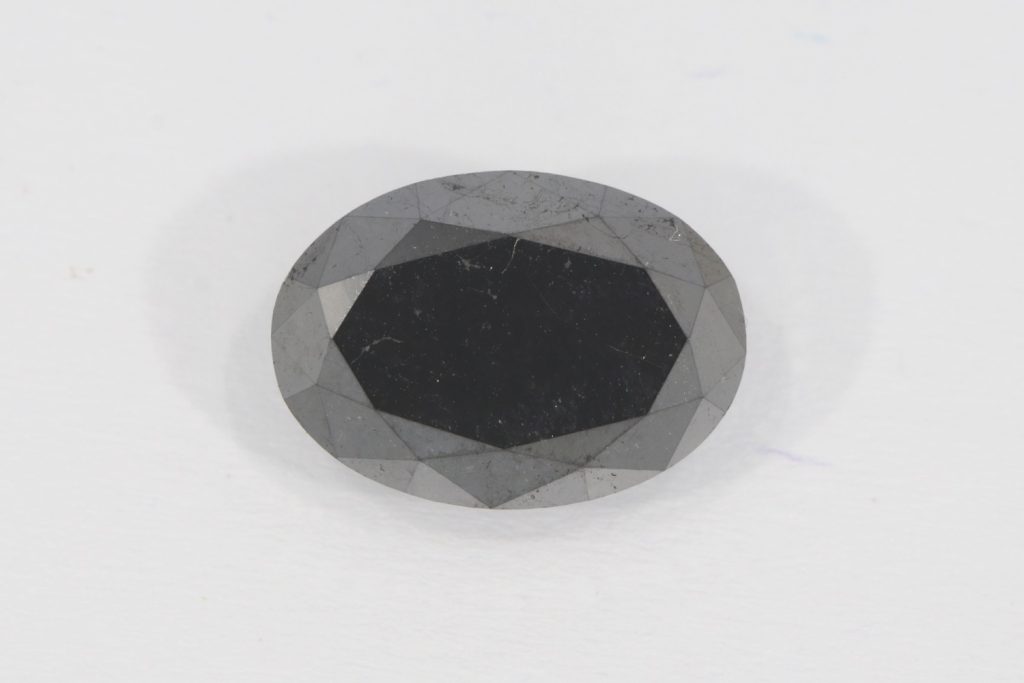
The reason is a different combination of properties that the market pays for. A black diamond does not offer transparency, brilliance and dispersion in the form typical of colourless or transparent fancy stones. It is attractive mainly for its appearance and hardness, and in jewellery it is therefore valued according to a different pricing logic.
Rarity in numbers
Natural fancy diamonds are often said to be exceptionally rare. Only specific figures, however, show how unevenly this rarity is distributed among the individual colours.
A frequently cited estimate puts natural fancy colour at roughly one diamond in ten thousand. For the rarest hues, the proportion is considerably lower still: according to data based on GIA grading, stones classified as predominantly pink make up less than 0.15% of graded diamonds.
The situation with pink diamonds was further affected by the closure of the Australian Argyle mine in 2020 after its reserves were exhausted. The mine had previously supplied more than 90% of the world’s production of pink diamonds. Significant natural pink stones have thus become an even more limited resource.
The extreme end of the market is shown by the CTF Pink Star: a 59.60 ct diamond with Fancy Vivid Pink colour and Internally Flawless (IF) clarity, which sold at Sotheby’s in Hong Kong in 2017 for 71.2 million dollars. At the time of the sale, it was a world auction record for a gemstone or jewel.
What determines the price of a coloured diamond
For colourless diamonds, the 4C system is the usual starting point. For fancy colours, carat weight, clarity and cut remain important, but their relative importance changes. Colour becomes the dominant parameter.
1. Colour – the dominant factor. The price is based mainly on the hue, saturation and intensity grade. The difference between Fancy and Fancy Vivid can be several-fold for otherwise comparable stones.
2. Clarity – usually carries less weight than with colourless diamonds. A saturated colour can visually mask some inclusions, so a stone with lower clarity can still look very good. Clarity grading therefore cannot be mechanically transferred from colourless diamonds to fancy stones.
3. Carat weight. The price per carat does not rise linearly. Strongly coloured diamonds also occur much more often in smaller sizes, so as the weight increases, the rarity of a particular combination of parameters can rise sharply.
4. Cut – with fancy diamonds, it works in favour of the colour. The round brilliant is designed to maximise light return, which can weaken the impression of colour. That is why shapes that can optically concentrate the colour are often used, such as cushion, radiant, oval or pear. The greenish-yellow stone from the introduction has a cushion modified brilliant cut, which matches this approach.
5. Colour distribution. The report also records how evenly the colour is distributed. Even means uniform distribution and is usually valued more highly than Uneven. For our 0.52 ct greenish-yellow stone, Even is stated.
6. Secondary hues. Most coloured diamonds have a modifier in addition to the main colour, for example orange with pink or green with blue. A secondary hue can significantly affect the price. Its effect, however, depends on the specific colour combination, its rarity and the attractiveness of the resulting hue; the presence of a modifier does not in itself mean a lower value.
The designation Greenish Yellow therefore means that the main colour is yellow and green modifies it. The value of a Greenish Yellow diamond therefore cannot be derived solely from the presence of the green modifier; what matters is the specific hue, its intensity, distribution and the overall rarity of the combination.
Comparison of prices per carat on real stones
The following overview is based on stones we physically have in stock. It is not a universal diamond price list but a practical illustration of how much the price per carat can change depending on the colour and its grade.
| Stone | Weight | Price | Price per carat |
| Fancy Intense Greenish Yellow | 0.52 ct | CZK 162,770 | ≈ CZK 313,000 |
| Fancy Intense Yellow | 0.70 ct | CZK 119,000 | ≈ CZK 170,000 |
| Fancy Light Blue | 0.25 ct | CZK 42,000 | ≈ CZK 168,000 |
| Fancy Vivid Yellow | 0.29 ct | CZK 39,000 | ≈ CZK 134,500 |
| Fancy Deep Yellow-Orange | 0.31 ct | CZK 33,650 | ≈ CZK 108,500 |
| Colourless, 1.01 ct | 1.01 ct | CZK 74,300 | ≈ CZK 73,600 |
| Colourless, colour E / SI2 | 1.22 ct | CZK 83,700 | ≈ CZK 68,600 |
| Black (carbonado) | 5.32 ct | CZK 44,000 | ≈ CZK 8,300 |
The prices given correspond to the situation at the date of publication; you will find the current range in the investment stones category.
The table shows two important things. First, the blue Fancy Light has a higher price per carat than the yellow Fancy Vivid, so the intensity grade alone cannot be assessed without the rarity of the specific hue. Second, the difference between the lowest and highest price per carat in the overview is almost forty-fold, even though all of them are diamonds.
Certification: with fancy colours, it decides the very basis of value
With a coloured diamond, the certificate does not merely confirm quality parameters. Crucially, it also documents whether the diamond is natural or laboratory-grown and whether its colour is of natural origin or has been technologically treated. For the value of a fancy diamond, this is decisive information.
Strong colour can be created by several technological processes, for example irradiation followed by annealing, HPHT treatment or laboratory growth of a diamond with the desired properties. To the naked eye, the difference can be very difficult to recognise, while in terms of price these are different categories.
In the certificate, it is therefore worth paying particular attention to these items:
- Origin of Color. For a natural fancy diamond, the origin of colour should be stated as Natural. If the laboratory detects a technological colour treatment, the report will mark it as treated and may also state the type of treatment used. For our greenish-yellow stone, Natural is stated.
- Color Grade. The full wording including modifiers, e.g. Fancy Intense Greenish Yellow.
- Color Distribution. Even / Uneven.
- Report number. It must be possible to verify it online in the laboratory’s database.
For a natural fancy diamond, laboratory assessment of the origin of colour is one of the fundamental proofs of its value. A report from a recognised gemmological laboratory makes it possible to distinguish natural colour from technological treatments.
The fancy diamonds in our range have certificates from the GIA, CGL and IGL laboratories. For each specific stone, the relevant laboratory and the report number are stated, which can be used to verify it.
Coloured diamonds as an investment: what you should know
Coloured diamonds are also often offered as an investment asset. For the rarest categories there are historical examples of significant price growth, but it cannot automatically be inferred that every fancy diamond will behave the same way. When buying with an investment intention, it is important to take practical limitations into account as well:
- Low liquidity. A diamond does not sell as easily as a publicly traded asset. A sale can take a long time and depends on finding a specific buyer.
- The spread between the buying and selling price. The retail price and the amount a dealer is willing to offer when buying back can differ significantly.
- Price growth is not uniform. Auction records concern mainly exceptional stones with high carat weight, a very rare colour and the highest intensity grades. A smaller Fancy Light or Fancy Intense stone is in a different part of the market.
- Certification is essential for resale. Without a report from a recognised laboratory, it is much more difficult to document the origin of colour and the parameters of the stone and to obtain an appropriate price for it.
This text is not investment advice. A coloured diamond is best seen primarily as an exceptional natural gemstone with a very specific combination of rarity, colour and optical properties.
Frequently asked questions
Is a coloured diamond always more expensive than a colourless one?
No. What matters is the specific hue, intensity, origin of the colour and other parameters. A faintly tinted diamond at the end of the D–Z scale can be cheaper than a high-quality colourless stone, and black diamonds have their own, usually lower, pricing logic.
Which colour is the rarest?
Pure red diamonds in particular are considered exceptionally rare. Green, purple, pure orange, pink and blue hues are also very rare. Yellow and brown diamonds are relatively more common within the fancy colours.
How can I recognise an irradiated diamond?
It usually cannot be reliably determined with the naked eye. The origin of colour is assessed in a gemmological laboratory using methods that can detect signs of technological treatment.
Why are coloured diamonds not cut as round brilliants?
The round brilliant is optimised for the return of white light, which can weaken the impression of colour. With fancy diamonds, shapes and proportions that promote the concentration and even distribution of colour are therefore often chosen.
What does Fancy Deep mean compared to Fancy Vivid?
Both grades denote strong colour, but Fancy Deep typically has a medium to dark tone and strong saturation, while Fancy Vivid combines very high saturation with a lighter to medium tone. That is why two stones with seemingly similar colour can look very different.
A coloured diamond is best seen in person
With fancy diamonds, seeing them in person is very useful, because neither photos nor video can fully capture how the colour responds to movement and to different lighting conditions. The diamonds in our range are physically available at our store at Korunní 29a in Vinohrady, where you can also inspect their certificates.
You will find the complete range among our investment stones and cut gemstones.